
- Home
- Compare the arts
- Brazilian Jiu-Jitsu vs Japanese Jujutsu
Compare the arts
Brazilian Jiu-Jitsu vs Japanese Jujutsu
Japanese jujutsu is the old family of unarmed arts of the samurai: throws, joint locks, strikes and weapon defences, usually practised through set patterns. Brazilian Jiu-Jitsu (BJJ) is its modern descendant by way of judo. It specialises in ground fighting and is practised mainly through live sparring. Jiu-jitsu, jujitsu and jujutsu are three spellings of the same Japanese word.
Side by side
| Brazilian Jiu-Jitsu | Japanese jujutsu | |
|---|---|---|
| Origin | Brazil, from 1917, through Mitsuyo Maeda and the Gracie family | Feudal Japan, across many schools (ryū) |
| Main focus | Ground control and submissions | Standing throws, locks, strikes and weapon defence |
| Training method | Drilling, then live rolling against full resistance | Mostly paired forms (kata), with some free practice |
| Competition | A large worldwide sport | Limited, and varies by school |
| Ranks | White, blue, purple, brown, black | Varies by school |
| Usual spelling | Jiu-jitsu | Jujutsu or jujitsu |
How one became the other
In the 1880s Kanō Jigorō reorganised several jujutsu schools into judo, adding free practice against a resisting partner. One of his school’s experts, Mitsuyo Maeda, settled in Brazil and taught Carlos Gracie. The Gracies concentrated on the ground phase and on leverage for the smaller fighter, and Brazilian Jiu-Jitsu was the result.
The real difference: how you practise
The techniques overlap. The method does not. BJJ students spend a large part of every class rolling: sparring at full effort, safely, because a caught partner taps. That constant testing is why BJJ skill is so dependable, and it is the main thing to look for when you compare schools.
If you want standing locks and throws
If the standing side of jujutsu is what draws you, look at Hapkido, which shares a root with Japanese aiki-jūjutsu and is built on joint locks, throws and falling. At Fighting Arts Collective, the jiu-jitsu class is Brazilian Jiu-Jitsu with Marco Costa.
Try them
Both are taught here.
Your first class is free. Take it in the one that sounds like you.
-
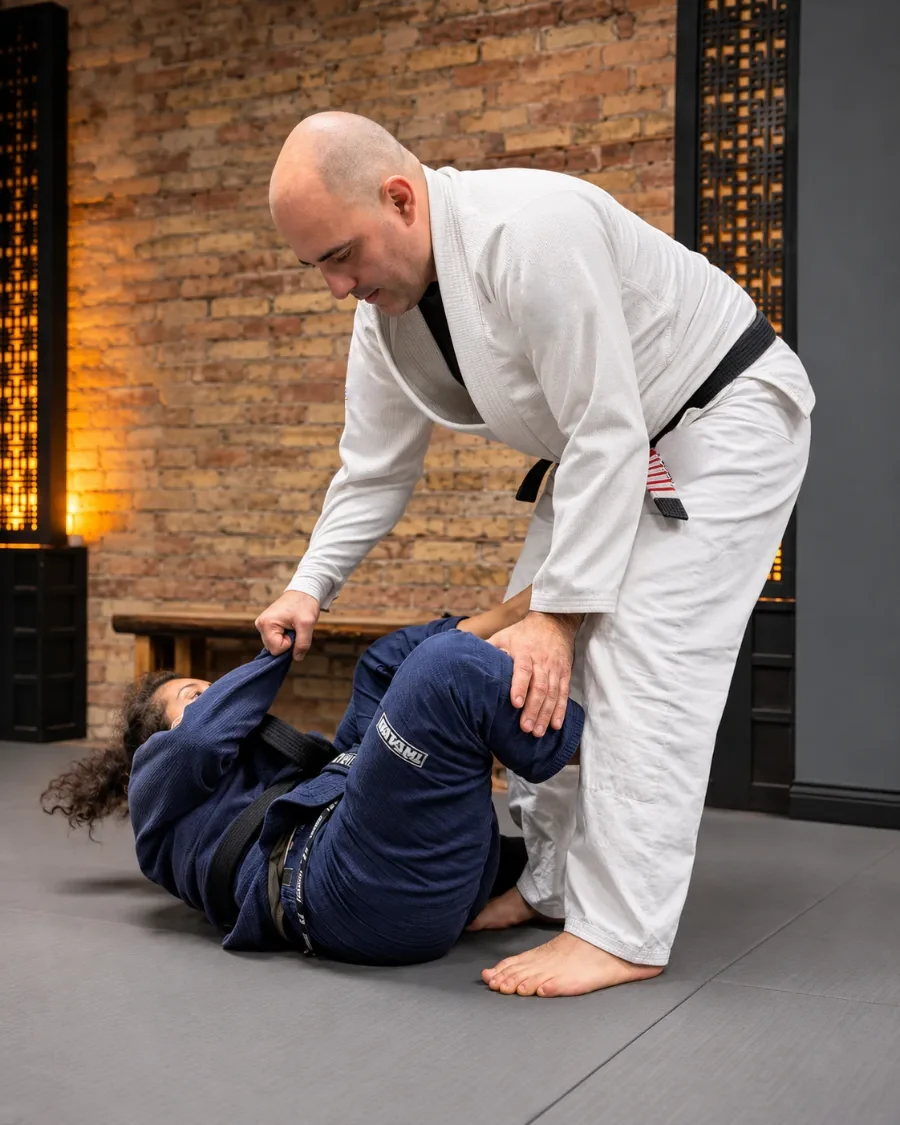 College
Brazilian Jiu-Jitsu
Leverage over strength. Control, escapes and submissions on the ground, taught by a fifth-degree black belt.
- With
- Marco Costa
- When
- Mon & Wed, 7:30 to 9 pm
-
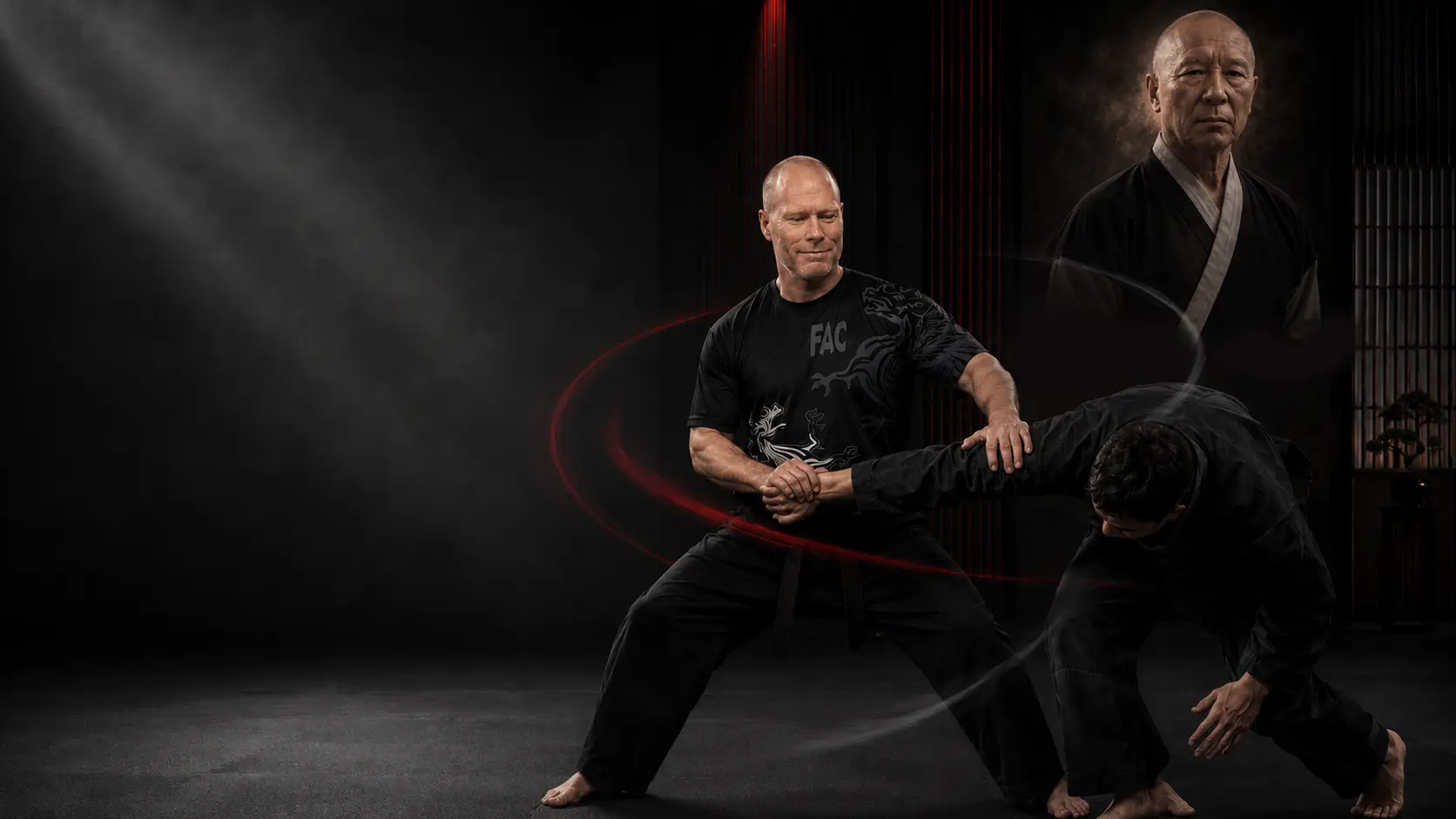 College
Hapkido
Korea’s art of the circle: joint locks, throws, kicks, and learning to fall without getting hurt.
- With
- Thomas Sniedzins
- When
- Mon, 6:30 to 8:30 pm
Straight answers
Common questions
Is jiu-jitsu the same as jujitsu?
They are different spellings of the same Japanese word. In practice, “jiu-jitsu” usually means Brazilian Jiu-Jitsu, and “jujutsu” or “jujitsu” usually means the older Japanese arts.
Does Fighting Arts Collective teach Japanese jujutsu?
No. The class is Brazilian Jiu-Jitsu, taught by Marco Costa, a fifth-degree black belt, on Mondays and Wednesdays at 846 College Street.
Which is better for self-defence?
BJJ’s strength is that everything is tested against full resistance, especially on the ground. Japanese jujutsu covers more standing material. For standing locks and throws at FAC, Hapkido is the closest relative.
Is BJJ the same as judo?
No, though they are siblings. Both descend from Kanō’s judo. Judo concentrates on throws and limits time on the ground; BJJ concentrates on the ground.